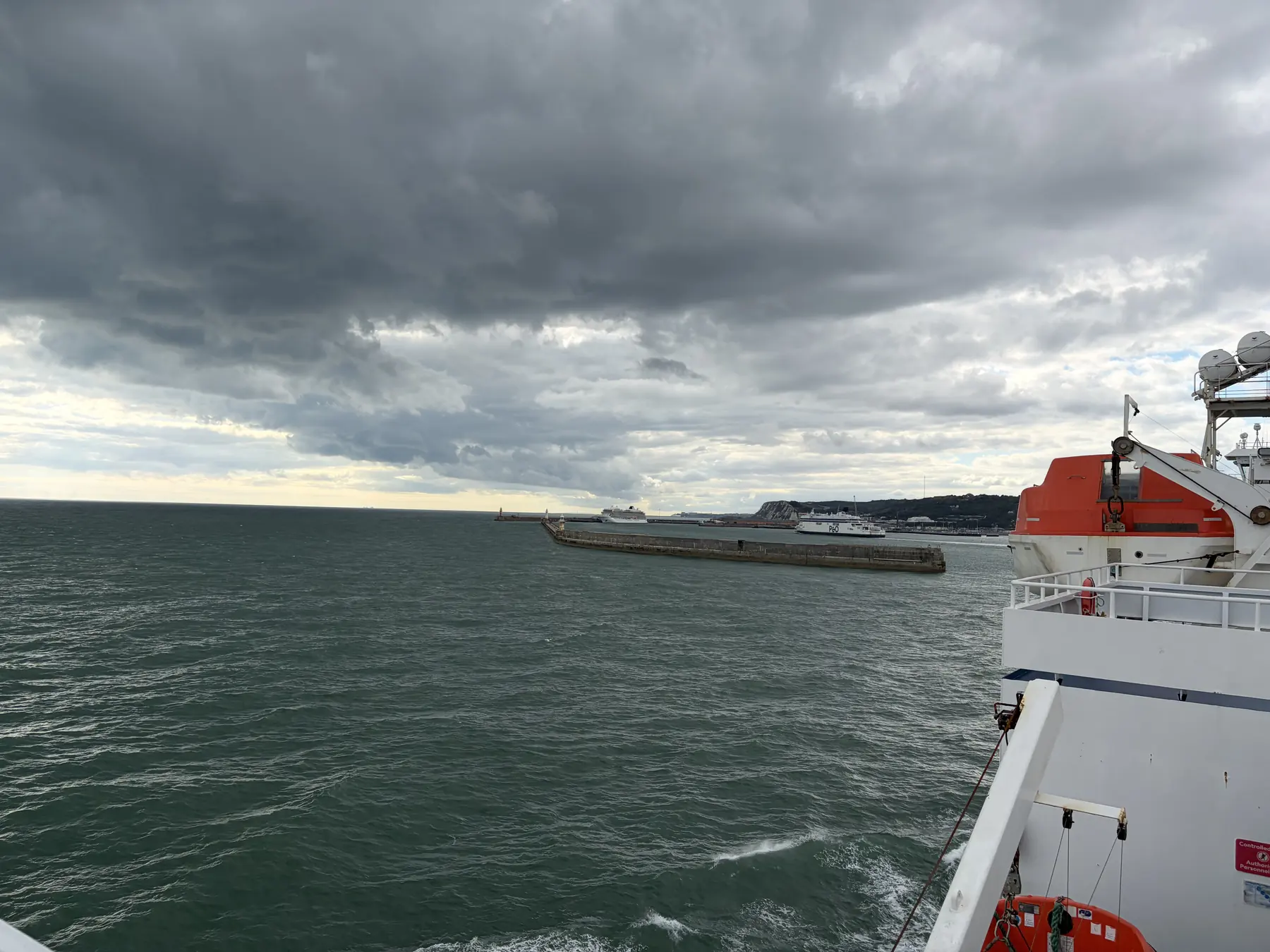
Weather on the Dover to Dunkirk Crossing
Wind and wave height decide how the two hours at sea feel; rain does not. The maps below show the forecast for the Strait of Dover, and below, what each wind force means for the ferry and when DFDS holds sailings back.
Wind in the Strait of Dover
The arrows show wind direction, the colour the strength. Click a point for the hourly forecast. A south-westerly blows almost across the route and gives the most movement; a north-easterly comes from ahead or behind and you feel it less.
Wave height on the route
Up to about 1 metre you notice little. Between 1 and 2 metres the ship moves noticeably; above 2 metres the movement is clearly felt. Purple and red on the map mean high waves.
Rain and visibility
Rain makes no difference to the crossing, only to the open deck and the drive to the port. Thick fog can cause delays: the ships enter and leave the harbours more slowly.
What the wind force means for the ferry
DFDS holds sailings back only in severe weather; the table shows what to expect at each wind force.
| Wind force | At sea | On board | Sailings |
|---|---|---|---|
| 0 to 4 | Calm to moderate | Hardly any movement, open deck pleasant | On schedule |
| 5 to 6 | White horses, waves of 1 to 2 metres | Noticeable movement, sensitive stomachs feel it | On schedule, occasionally a few minutes late |
| 7 to 8 | Rough, waves of 2 to 4 metres | Clear rolling, open deck partly closed | Delays possible, especially berthing |
| 9 and above | Storm | Heavy weather | Sailings may be held or combined; follow the sailing updates |
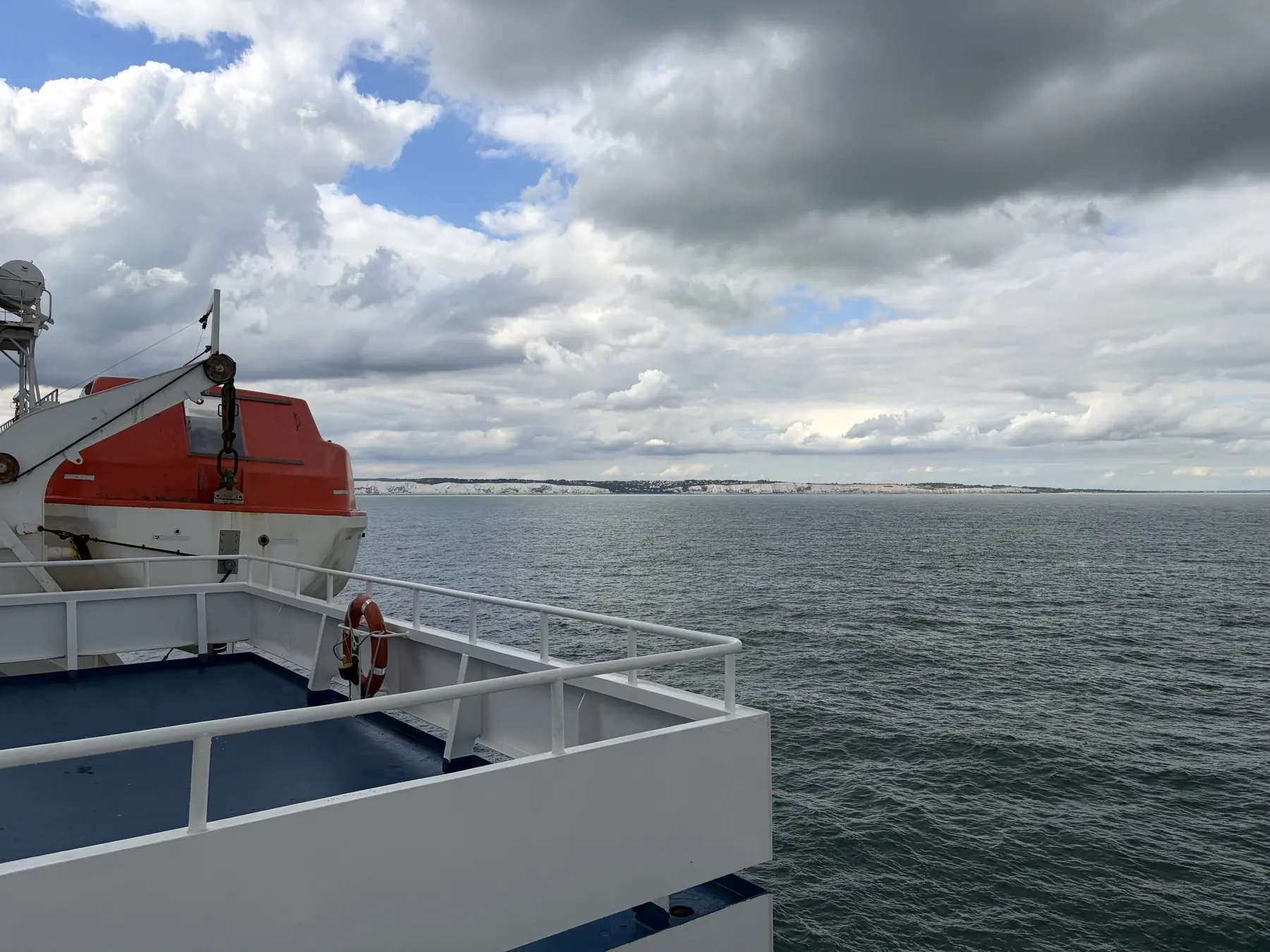
Seasick on a two-hour crossing
Most passengers notice nothing on this short crossing. If you are prone to it, these measures help:
- Sit midships, by a window, and look at the horizon; fresh air on the open deck helps if it is open.
- Eat lightly before departure and skip alcohol; an empty stomach makes it worse.
- Take a travel tablet (cinnarizine or hyoscine) at least an hour before boarding; on board is too late.
When is the weather calmest?
From May to September the Strait of Dover is usually calm, with a south-westerly of force 3 to 5. From November to February storms are most frequent, mostly from the south-west; those are also the months when sailings are most often held back. Travelling in winter, choose a sailing in the middle of the day so that a delay still leaves you an alternative the same day.
More weather information for the crossing
- Ferryweather: Dover to Dunkirk gives the expected wave height, wind and seasickness risk for each sailing.
- Live delays and cancellations are on our sailing updates page.
- Today’s departure times are on the timetable.
Questions about the weather
Does the ferry sail in a storm?
Usually. DFDS holds sailings back only in a severe storm, generally force 9 or more, or when the swell makes berthing unsafe. Cancellations happen a few times each winter.
How do I know my sailing is going ahead?
Check our sailing updates page on the day and the email or text from DFDS; it sends a message to the address in your booking when anything changes.
Is the crossing to Dunkirk rougher than to Calais?
No. Both routes cross the same Strait of Dover; the Dunkirk route is half an hour longer and lies a little further east, but the weather is the same.