Dover to Dunkirk ferry check-in, step by step
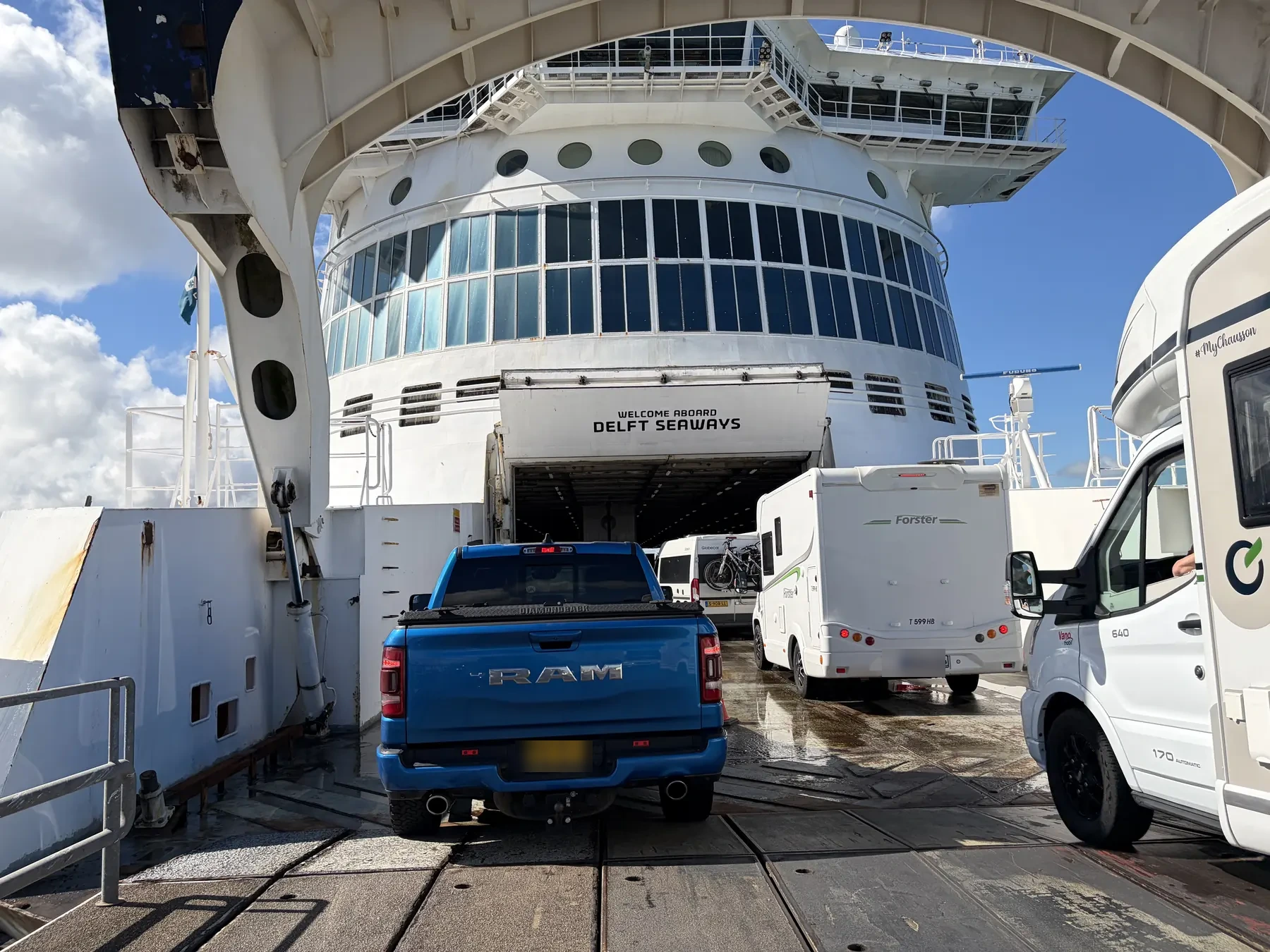
You stay in the car the whole time: booth, passport control, waiting lane, loading ramp. Check-in closes 60 minutes before departure. Outside the holidays, be at the booths 60 to 90 minutes before departure; in the school holidays and on Fridays and Saturdays allow 90 to 120 minutes for French passport control. The steps below follow the order at the port, with photos from a crossing on the Delft Seaways.
Check-in in short
| Check-in closes | 60 minutes before departure |
| Recommended arrival at Dover | 60 to 90 minutes before; school holidays, Fridays and Saturdays 90 to 120 |
| Recommended arrival at Dunkirk (return) | 75 to 90 minutes before; school holidays, Fridays and Saturdays 90 to 120 |
| What you show | Booking reference or email, passports for everyone in the car |
| Border control outbound | French passport control in Dover, before boarding |
| Border control return | French exit checks and UK Border Force, both in Dunkirk before boarding |
| Getting out of the car | Not needed, unless you want to use the terminal building |
| Boarding | From about 30 minutes before departure |
At Dover: from the A20 to the ramp
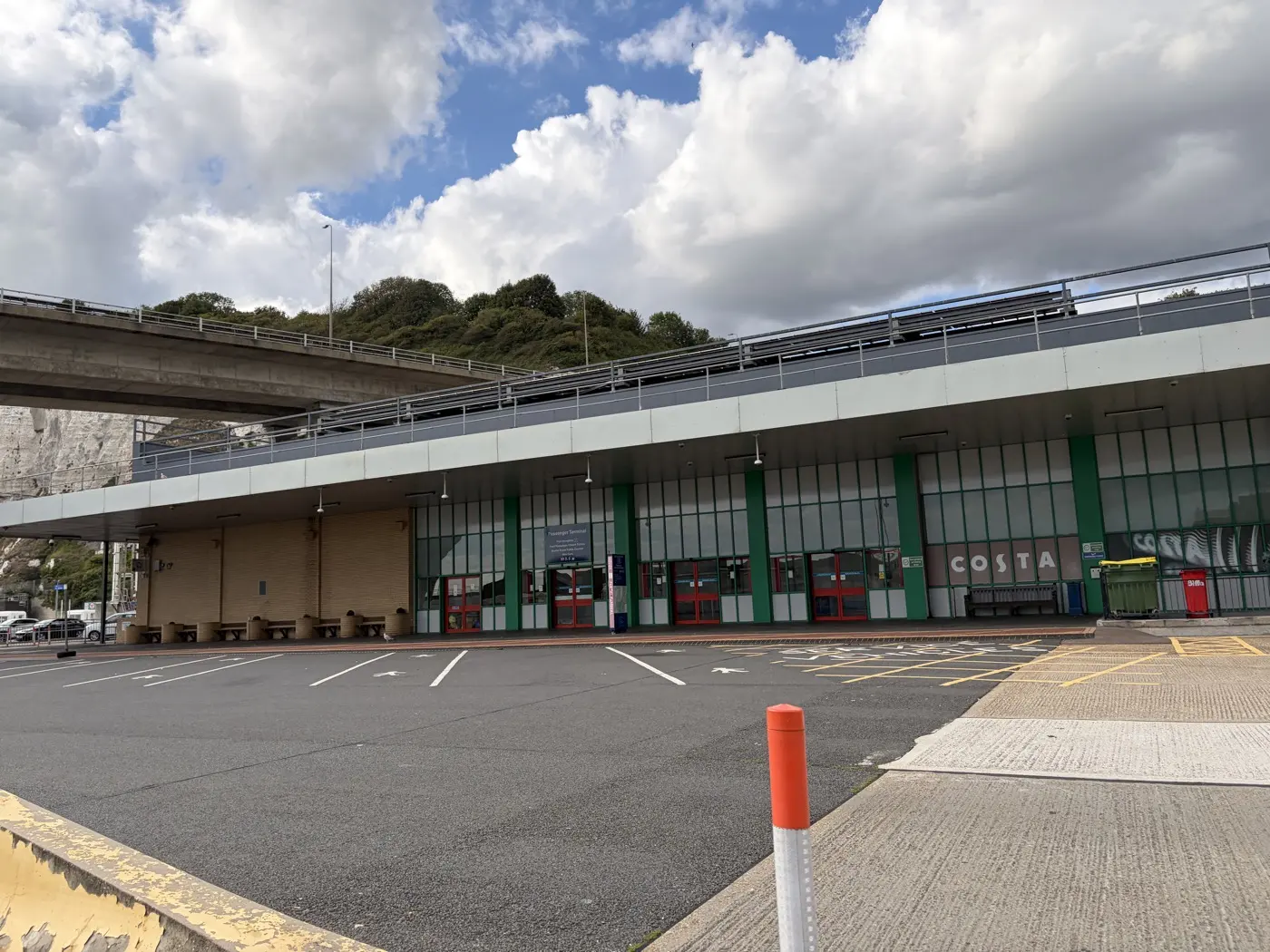
- Follow “Port” to Eastern DocksFrom the A20 or A2 the signs take you into the port, postcode CT16 1JA. Keep to the DFDS lanes and look for the Dunkirk sign: DFDS sails to Calais from the same booths.
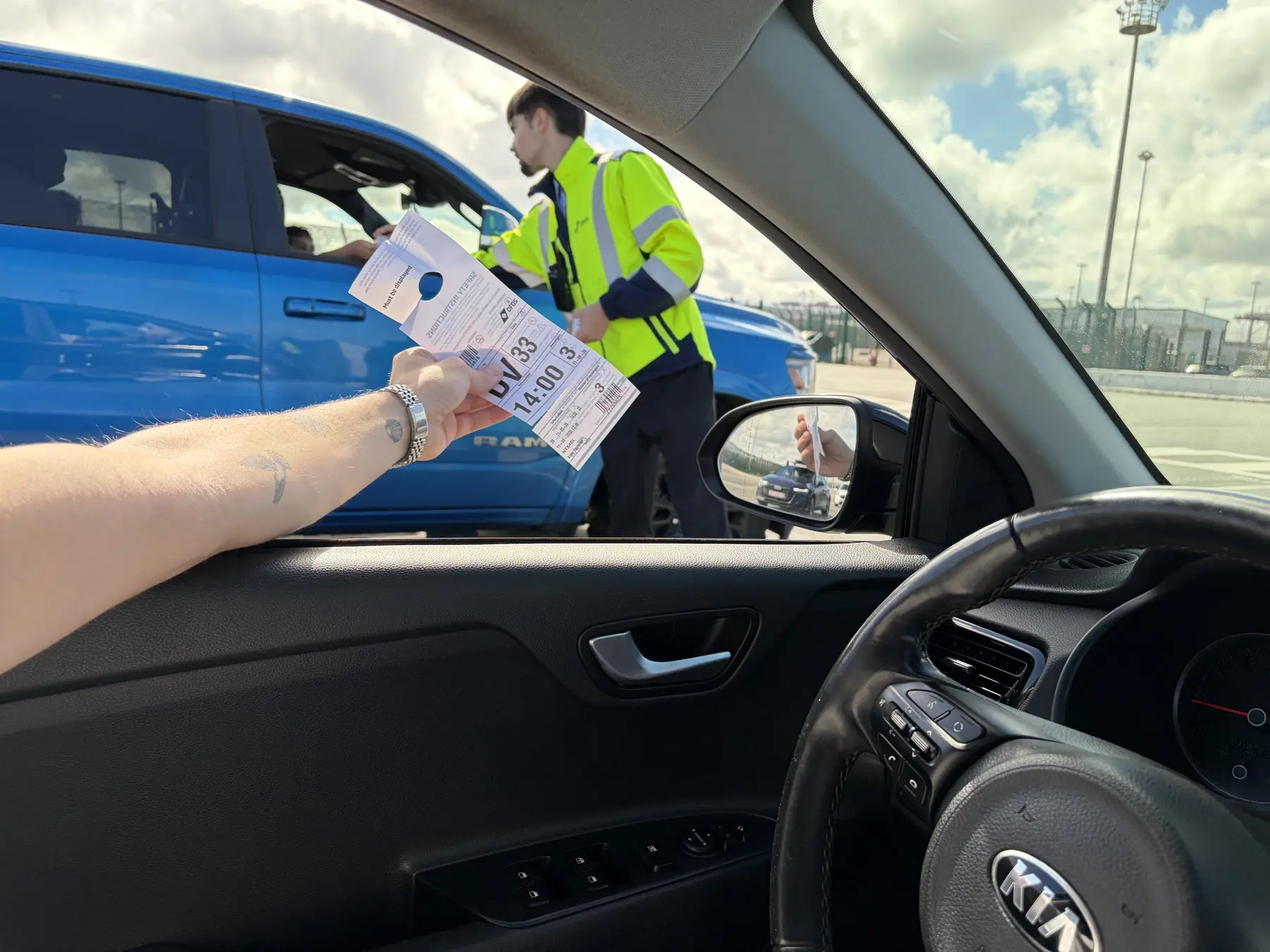
- The check-in boothsGive your booking reference or show the email. The agent finds the booking and asks for the passports.
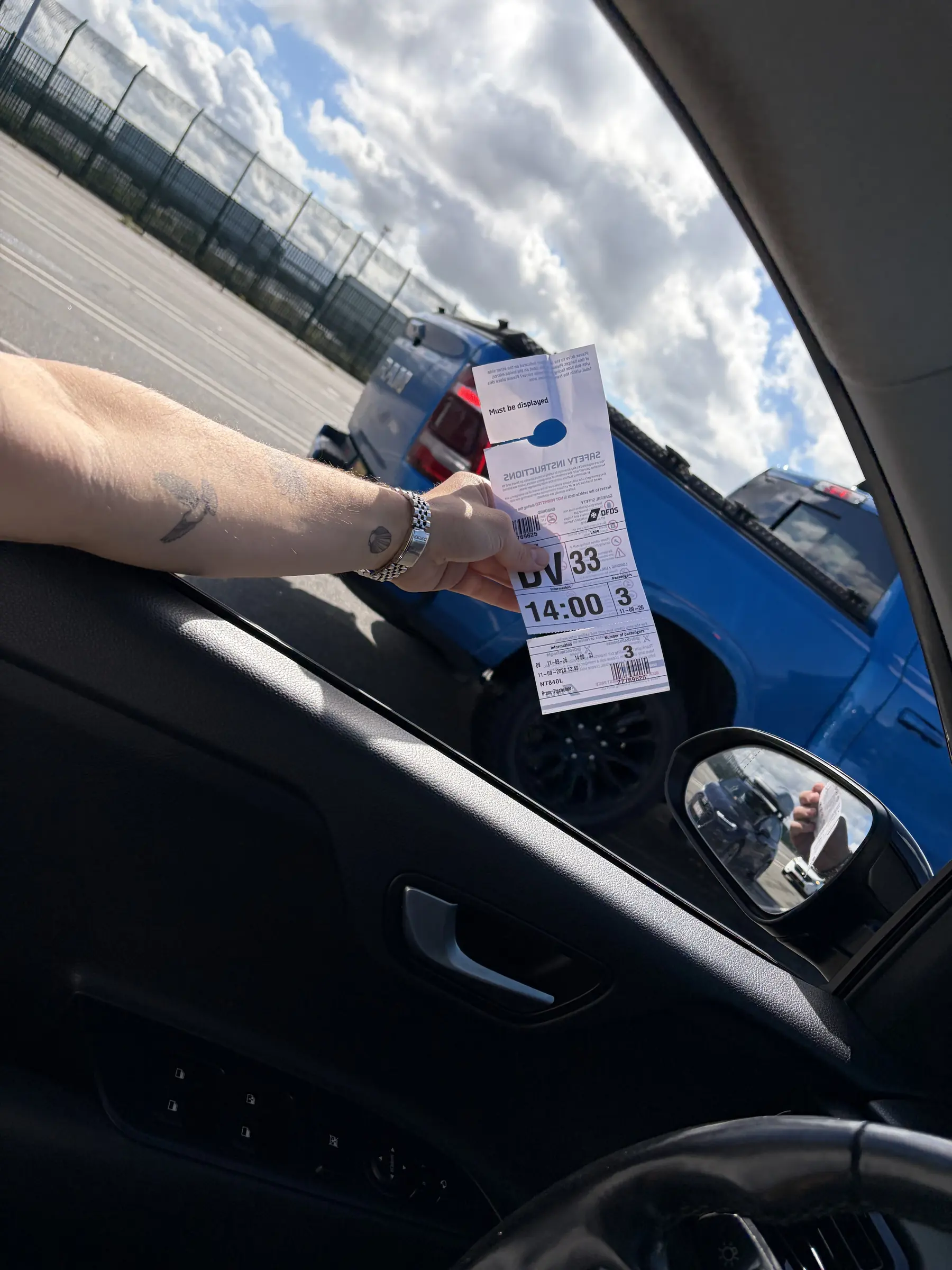
- The hangerYou get a card with your lane and sailing. Hang it on the mirror; it is checked twice more on the way to the ship.
- French passport controlAt booths you drive up to. The Police aux Frontières registers your entry to the Schengen area. Under the EU Entry/Exit System, UK passport holders give fingerprints and a photo on their first trip, at a kiosk or the booth; later trips are a quick scan. UK Border Force may carry out spot checks.
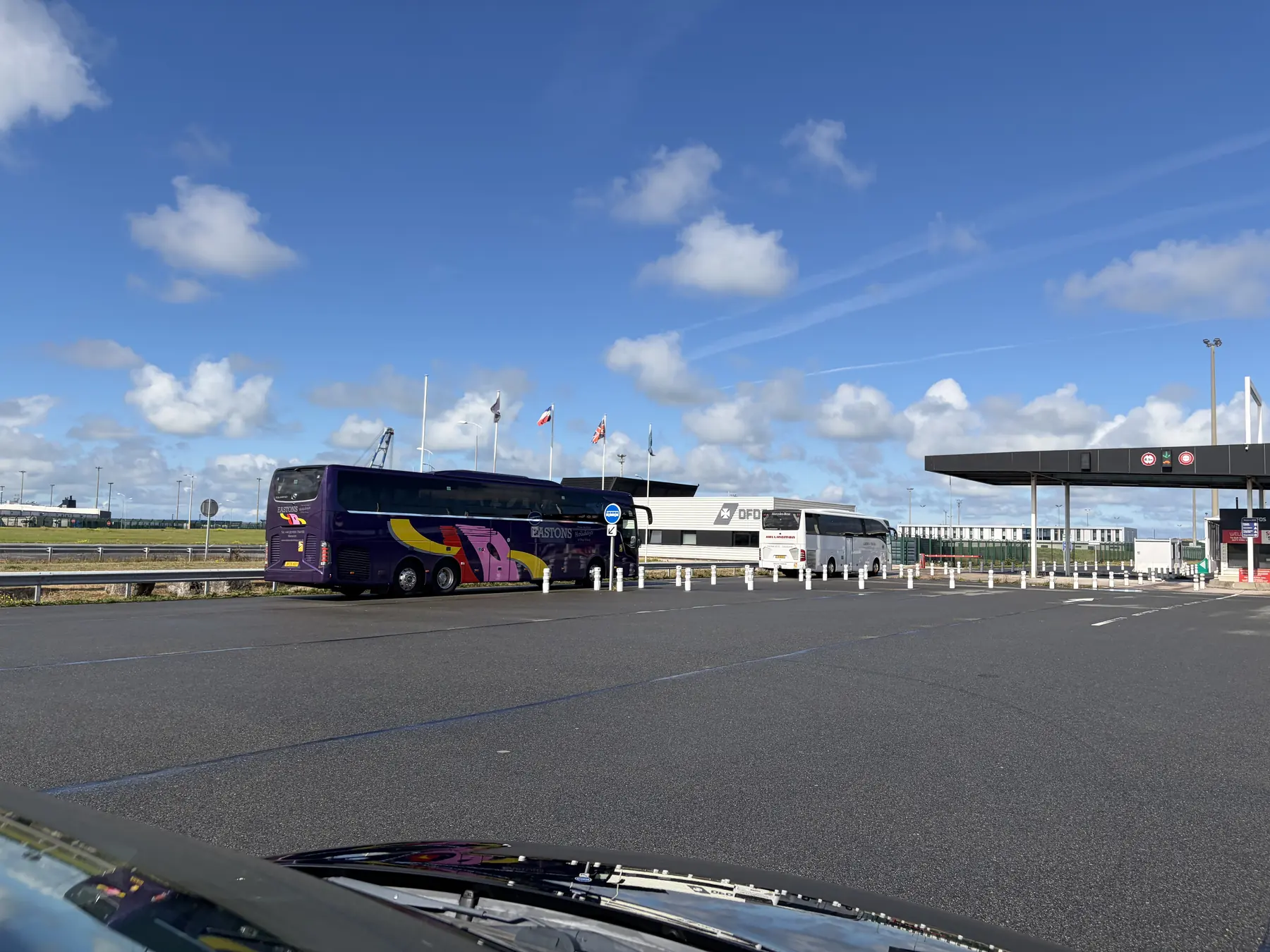
- The waiting laneDrive to the lane on your hanger and switch off. Toilets, food and a small shop are alongside the lanes; there is a dog exercise area by the terminal.
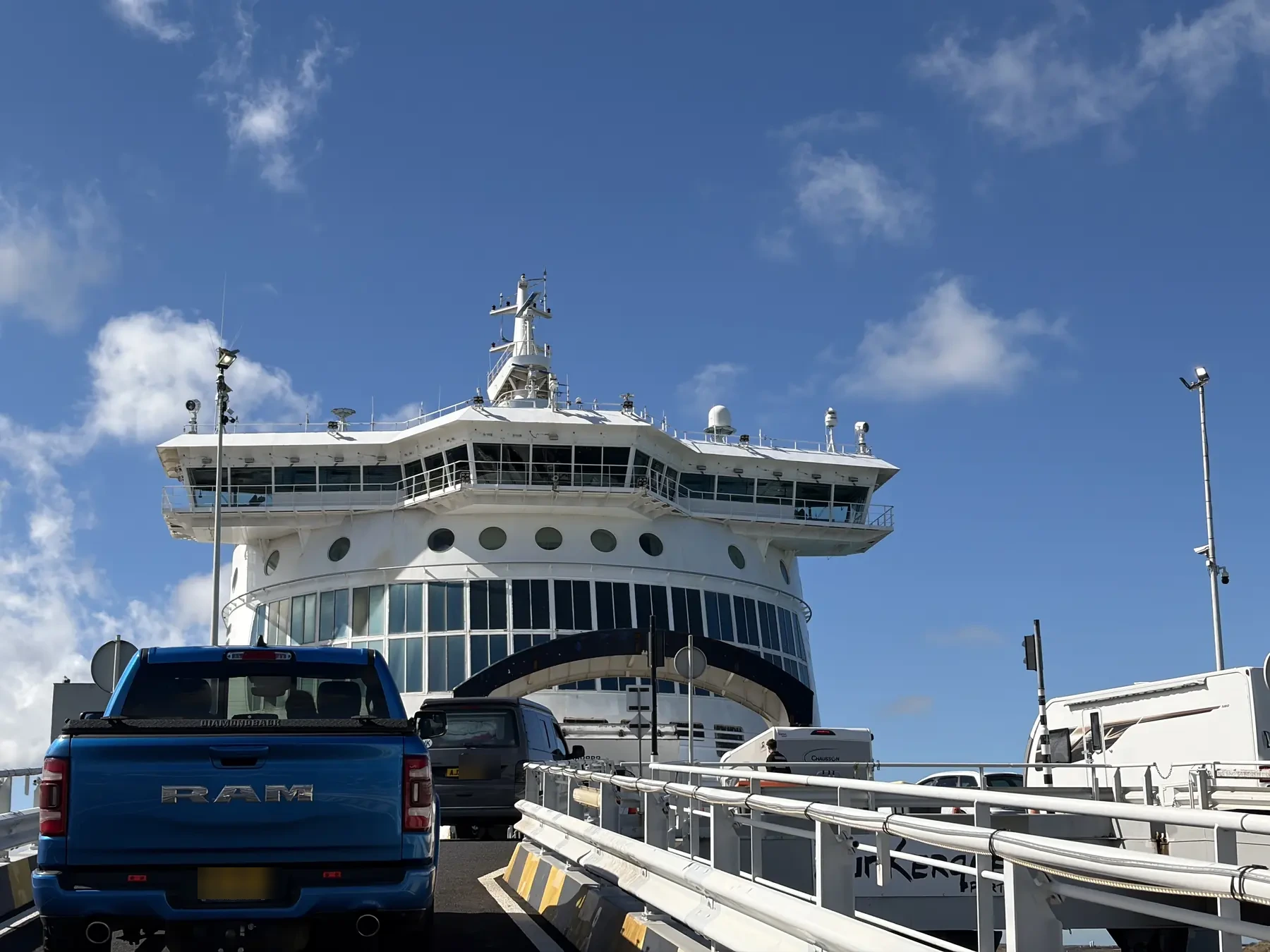
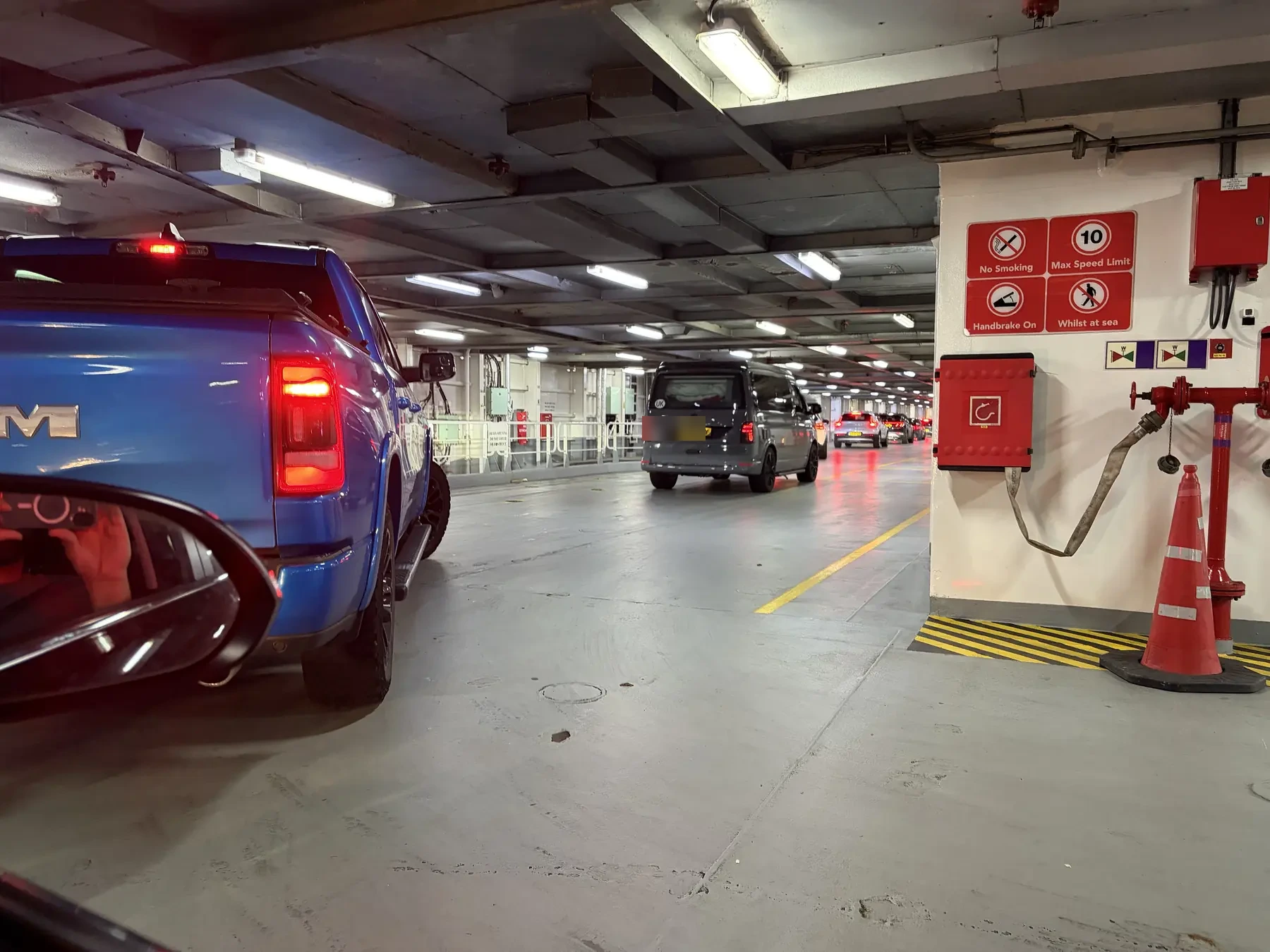
- BoardingAbout 30 minutes before departure the lanes go up the ramp one by one. Park where the deck crew put you, handbrake on and in gear, and take what you need for two hours. The car deck is closed during the crossing.
Documents
| Who or what | What you need |
|---|---|
| UK passport holders | Passport issued less than 10 years before the day you enter the EU and valid for at least 3 months after the day you plan to leave. No visa for up to 90 days in any 180. EES registration on your first entry. |
| EU and other passport holders | Passport or, for EU citizens, a national identity card is accepted for France; for the return to the UK, EU citizens need a passport and an ETA. |
| Children | Own passport. A child travelling without both parents should carry a signed consent letter from the absent parent. |
| Car | V5C logbook, or a VE103 certificate for a hire or lease car. Insurance certificate. A UK sticker on the rear unless your plate shows UK with the Union flag. |
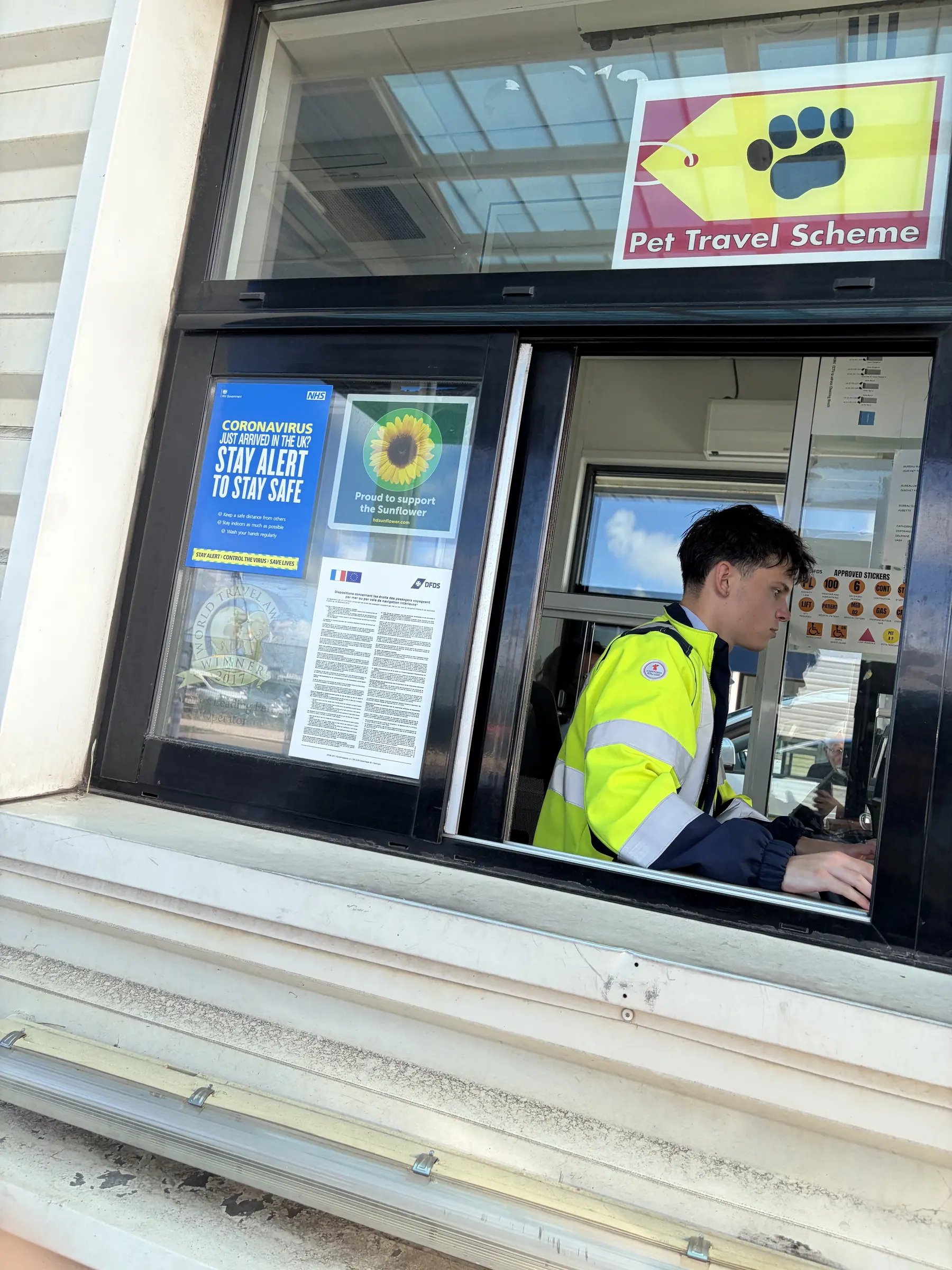
| Dog, cat or ferret | Animal health certificate from an official vet, issued within 10 days of entering the EU, valid for four months of onward travel. Microchip, rabies vaccination at least 21 days old. For the return: tapeworm treatment 24 to 120 hours before arriving in the UK, entered in the certificate. The booth with the Pet Travel Scheme sign checks it. |
Tick everything off on the ferry checklist.
Late or early?
Late. If you arrive after check-in has closed, DFDS puts you on the next sailing with space. With an Economy ticket an amendment fee may apply; with Flexi it does not.
Early. If you are at the port well before your sailing, ask at the booth whether you can go earlier. With Flexi there is no amendment fee; with Economy it depends on space and a fee may apply.
Checking in at Dunkirk for the way home
At Loon-Plage it works the same way, mirrored: DFDS booths, then French exit checks and UK Border Force, both on French soil, then the lanes next to the terminal building. With one operator, 1 hour before departure is enough outside the holidays; allow 90 minutes in the school holidays. UK Border Force may open the boot or the caravan for a customs check; that takes a few minutes. When you drive off in Dover there is no further control. See Dunkirk port.
Questions about check-in
How early do I need to be at the port?
At the booth no later than 60 minutes before departure. What happens if you arrive later depends on your ticket type; check your booking conditions. In Dover, add time for French passport control in the holidays.
Do I have to get out of the car at check-in?
No. Booth, border control and boarding all happen from the car. You get out only if you want the terminal while you wait, or for the EES kiosk on your first trip if the booth cannot do it.
What is the Entry/Exit System?
The EU’s digital border register for non-EU visitors. Instead of a stamp, your passport, fingerprints and photo are recorded at the French border in Dover on the first trip. It counts your 90 days in 180 automatically.
Will my car be searched?
Occasionally, at random, on either side. Customs may ask to see the boot or the caravan. It takes a few minutes; do not plan for it as standard.